FORAGING
About a year ago, I wrote about my foraging: https://wrayfreden.com/2024/05/05/foraging/. What I neglected to mention was that almost all of my foraging stories have been from my married life.
Then it dawned on me: I had been foraging with my mother when I was only five years old.
I had never really thought of picking wild Concord grapes as foraging. Across from our street was the old railroad bed, and it had tons of grapes hanging there, just waiting for the birds—and for Mom, Dad, and me—to gather them.
We picked baskets full of grapes, ripe and sweet. Mom made grape juice and jelly from them, and she had been doing it long before I was old enough to help. The Depression years were tough, and free wild grapes were a welcome source of something sweet.
Then there were beach plums.
They were not in our backyard, so picking them meant a trip to the seashore and the sand dunes. A short trip to the south end of Humarock brought us to a large section of the Rexhame Beach dunes, filled with beach grass, bayberry bushes, rugosa roses, and beach plum bushes. There were plenty of plums to be had.
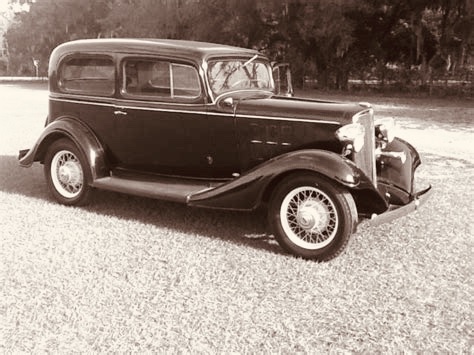
THE OLD CHEVY, JUST WAITING TO GO ANYWHERE. ®
For those who know the area today, you may be thinking of driving over the Julian Street Bridge, turning right onto a paved road, and continuing to a small gravel parking lot.
Well, not in 1939.
There was no Julian Street Bridge, no paved road, and no gravel parking lot.
We crossed the Sea Street Bridge to Central Avenue, which was paved as far as Berry Avenue near the fire station. From there, the roads became gravel for a few more streets.
River Street was mostly sand, with windblown drifts. There were no camps south of Julian Street. We would make our way to the end of River Street and get close enough to walk the rest of the way to the Rexhame dunes.
One day, the wind was blowing like hell. When Mom opened the car door, a strong gust ripped it right out of her hand.
Out I jumped, jacket hood up, holding tightly to the handle of my basket.
Picking was fairly easy if you kept your back to the wind. Some of the bushes were thick and bushy and loaded with plums.
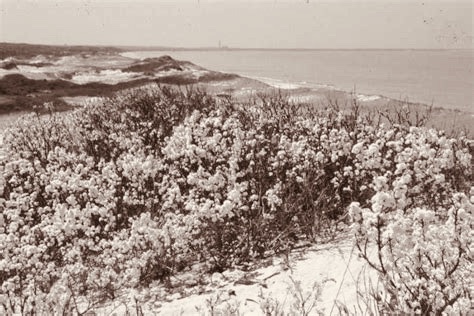
SPRINGTIME—A SEA OF WHITE. REXHAME DUNES, LOOKING BACK TOWARD HUMAROCK BEACH—WITHOUT A COTTAGE IN SIGHT.
After the spring bloom came a summer of growing fruit.
It did not take long to fill my basket.
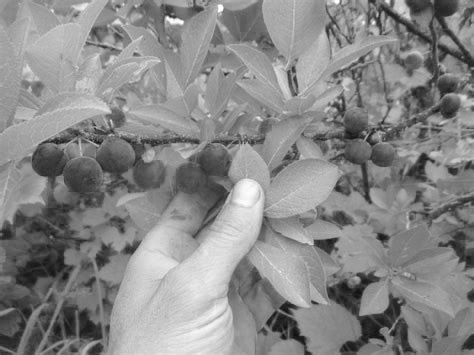
BEACH PLUMS READY FOR PICKING.
Mom said we needed ten quarts. I had no idea what ten quarts looked like.
I made about three trips back to the car and dumped my share into the big basket on the back seat. Mom’s picking filled the basket the rest of the way, and then we headed home.
But not before stopping at Stead’s—Stedman’s General Store—for a candy bar and a Coke. That cost Mom ten cents. Mom got herself a treat, too.
Then it was home to unload.
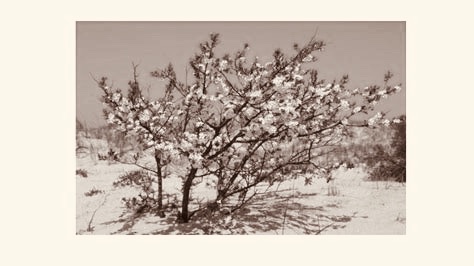
THIS BUSH WAS CHOCK-A-BLOCK FULL!
At home, out came the garden hose for the first washing of the plums. Then they got another washing in the kitchen sink.
Next, they went into a large pot to be boiled down into a mush.
Near five o’clock, the pot was pushed aside so Mom could start supper.
When Dad arrived home, his first words were, “Oh, plums for supper!”
Mom laughed.
After supper, Mom and Dad got to work on the cooked plums, separating the skins and seeds as best they could.
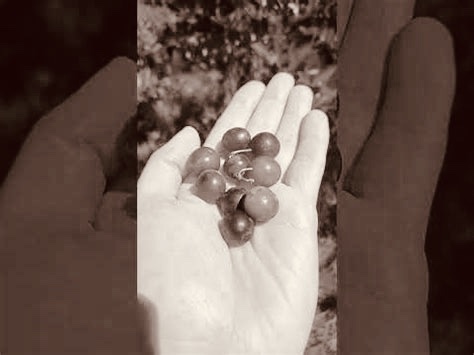
BEACH PLUMS BEING PREPARED FOR JELLY.
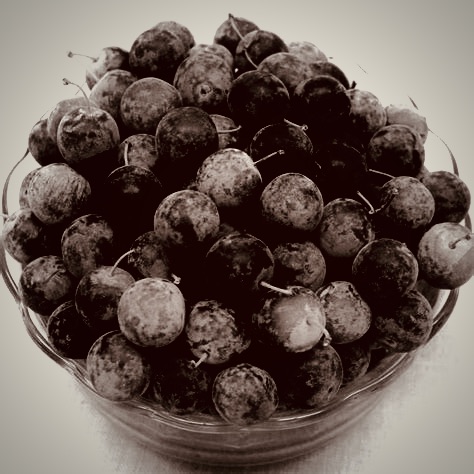
THIS PILE WENT INTO THE POT TO BOIL.
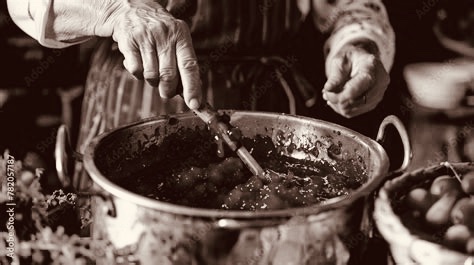
FIRST BOIL-OFF: A POT OF MUSH, SKINS, AND SEEDS.
The mash was poured into a bag, and the bag was squeezed to drain out the juice. A surprising amount came out.
Then the bag was hung on a bracket over the sink and left to drip overnight into a large pan. It was amazing to watch the clear juice flow out.
Dad would occasionally give the bag a hard squeeze and an upturn to get the flow going again.
By nine o’clock it was my bedtime, so upstairs I went—quite happily, because I did not have to listen to that drip, drip, drip all night.
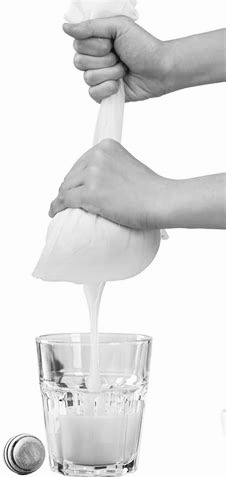
MOM GOT THE DRIPPING STARTED WITH A SQUEEZE.
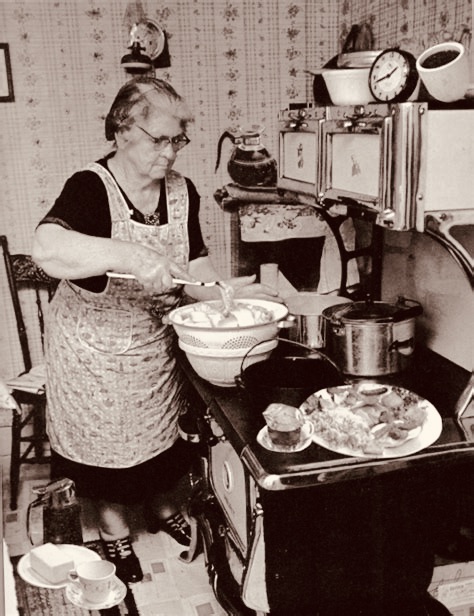
NANA, HELPING.
This photograph was from another jelly-making session some years later. Nana came to help out, which was always a treat because she usually arrived with a bag full of goodies.
Mom added sugar, pectin, and lemon juice, brought the mixture to a boil, and then let it cool before pouring it into jelly jars.
The jars were sealed with melted paraffin wax.
Fifteen pints finished. What a batch!
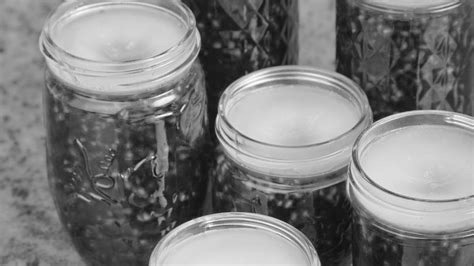
MOM MELTED PARAFFIN WAX AND POURED IT OVER THE JELLY TO SEAL IT TIGHT.
Next came the cleanup.
The discarded plum skins and seeds were put into two buckets on the porch for me to carry out to the chickens.
On went my jacket and my rubbers over my shoes, and off I went to the chicken yard.
When the chickens saw me coming, they knew food was on the way. They had never seen treats like these before.
I dumped the bucket into the trough, and the chickens went crazy—clucking, squawking, and flying around with plum skins hanging from their mouths.
Twelve happy girls.
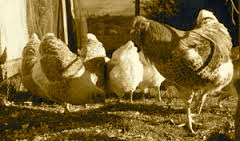
TWELVE HAPPY GIRLS.
The roosters were in another enclosed pen. I would feed them next.
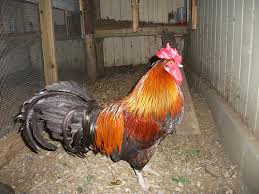
THE ROOSTERS WERE IN A SEPARATE PEN.
Just think about the cycle.
The kitchen scraps went to the chickens. The chickens processed the scraps. I cleaned out the droppings and spread them on the garden—and, oh, did the vegetables love chicken manure!
And in return, we had some of the best-tasting eggs you could ever eat.
I remember those beach-plum-picking trips from 1939 through 1946, all through the years of World War II.
Mom always managed to save enough sugar to make jelly each year.
If you are wondering what we used beach plum jelly on, have you ever heard of a peanut butter and jelly sandwich?
Or waffles smeared with plum jelly?
Beach plum jelly was special.
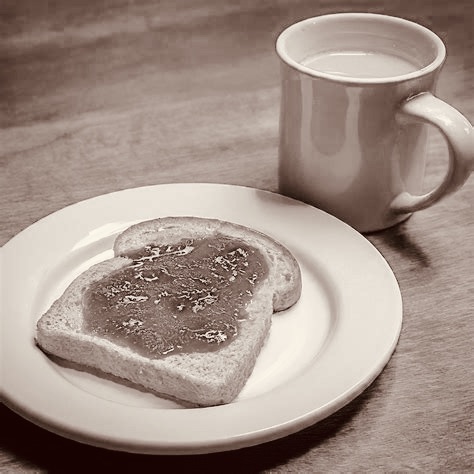
TOAST, PLUM JELLY, AND A CUP OF WARM MILK. LIFE WAS GOOD.
I had almost completely forgotten about those wonderful years from 1939 to 1946.
In 1947, we moved into our new house. By then there were two extra mouths to feed, too many chores to do, and plenty of finishing work on the house.
I just happened to be the right age for the “TO DO” list.
From then on, jams and jellies usually came from the A&P, or occasionally homemade from the food tables at the Marshfield Fair.
A FEW OF MY THOUGHTS:
The beach plum I remember was a scraggly little bush fighting to survive in salty ocean-side sand.
In the spring, it burst into beautiful white blossoms. Those blossoms became small yellow-green fruits, then changed to purple-pink, and finally ripened to the familiar deep plum-blue color.
It always amazed me how hard those bushes had to fight to survive. The wind was constant. Salt spray came off the ocean. Their roots had to search through poor sandy soil for whatever nutrients they could find.
And yet they survived.
Before development changed so much of the coastline, beach plums grew in abundance along the eastern shore. Their fruit was there for the taking, ready to become jam, jelly, or plum butter.
Then came a summer camp.
Then ten summer camps.
Then a bulldozer or two, leveling the dunes and plowing through the beach grass, rugosa roses, and beach plum bushes.
Gone.
Some surviving plants were pushed into piles. Others disappeared later because property owners did not think the scraggly beach plum belonged in their landscaping.
Rugosa roses could be trimmed and controlled, but the
Loved this piece! Thank you for posting it. And you’re right about their being hard to come by nowadays. I do wish the beach plums were still there. You can occasionally find them along Duxbury Beach, if you’re lucky. And you might find some down the Cape.
I’ve made beach-plum jelly, but I don’t use pectin, which requires more sugar, as your recipe indicates. If you use cup-for-cup strained juice and sugar, no more than four cups of each, you get a fine jelly that sets up nicely. You do have to boil the daylights out of it, though! Jelly (any kind that I make) is done when it “sheets” off the spoon you’re stirring it with or comes to a “boil that can’t be stirred down.” If you want to be more scientific about it, you cook it until it reaches the “Soft-Boil” setting on your thermometer. I also gave up on using paraffin to seal the jars and now flip the filled and capped jars over on a sheet pan for 30 seconds to a minute, then turn them right-side up again. In a few minutes, the jar tops will “pop” as they snap down in the center, and the seal will be complete. If any of the jars don’t seal within half an hour or so, you can use the “preferred” way, which is to using the boiling water method, which is described in numerous books.
Happy picking and jelling!
Marguerite Krupp
Loved this piece! Thank you for posting it. And you’re right about their being hard to come by nowadays. I do wish the beach plums were still there in Marshfield. You can occasionally find them along Duxbury Beach, if you’re lucky. And you might find some down the Cape.
I’ve made beach-plum jelly, but I don’t use pectin, which requires more sugar, as your recipe indicates. If you use cup-for-cup strained juice and sugar, no more than four cups of each, you get a fine jelly that sets up nicely. You do have to boil the daylights out of it, though! Jelly (any kind that I make) is done when it “sheets” off the spoon you’re stirring it with or comes to a “boil that can’t be stirred down.” If you want to be more scientific about it, you cook it until it reaches the “Soft-Boil” setting on your thermometer. I also gave up on using paraffin to seal the jars and now flip the filled and capped jars over on a sheet pan for 30 seconds to a minute, then turn them right-side up again. In a few minutes, the jar tops will “pop” as they snap down in the center, and the seal will be complete. If any of the jars don’t seal within half an hour or so, you can use the “preferred” way, which is to using the boiling water method, which is described in numerous books.
Happy picking and jelling!
Marguerite Krupp
Great story Ray – the good old days when life was real.
Cheers, Ed H
Thanks, Ray. I thoroughly enjoyed the article.
Great memories, Ray! Thanks for sharing!
I am now full-time DownEast as well living on Islesboro in the remodeled Carriage House. Say hi to Carol for me and keep the memories coming.
Scott
What a wonderful post about times gone by and environmental riches gone by.
Wonderful stories about days gone by and environments gone by. Really enjoyed this. May mention it in my next book.
Thanks Ray, we have a beech plumb on our property in Norwell on the North river. We half the sugar, add some red wine and no pectin. Love your posts.
Bob
Thanks Ray! Jackie Powell and Mary-Lou MacLean picked both Grapes and Beach Plumbs and made Jelly which was shared with we Beach Girls. I love Beach Plum Jelly.
I always enjoy your stories of a simpler time. Thank you for sharing