The Pine Street Dump

As long as I can remember, Sunday mornings were the dump run. Dad would get the trash barrel up onto the front bumper of his old Chevy, tie it down, then off to the Pine Street dump.

This was exciting to me. First, unload the trash. Then find as many of gallon jugs and wine bottles as I could. We would stand at the edge of the trash and Dad would throw a jug up into the air and I would throw a wine bottle at it. With luck, I would make contact and crash the jug to bits! Oh yes, there were many misses. I often wonder how dangerous this could have been.

Next, there was looking for treasures to take home. Sometimes I would find a usable toy car or truck, a table and chair for use in my tent, which was set up in our back yard. Dad’s great finds were old lamps that he would fix up to use in our house. The dump attendant was usually not there on Sundays, so “pickin” was uninterrupted.

One day, we arrived and unloaded. There was a desk upended, the drawers were out, and alongside, all empty. Dad uprighted the desk; a small drawer was still in it, the knob was gone and the drawer was stuck. I got a screwdriver from Dad’s toolbox and pried it open. Oh-my-word, it was full of watches and chains, rings, tie clips, cuff links and other gold stuff. Out came a watch, and as I was winding it to see if it worked, in came the dump attendant. He jumped out of his truck and shooed us out of there!

I slipped the Waltham watch into my pocket and we left. When we arrived home, Dad inspected the watch. It was running. What a find! Dad took it to a jeweler in Boston near his work. He had it cleaned and timed. The jeweler said it was a nice watch but very common and not worth a whole lot — that was in the 40s. Dad wore that watch to work for many years. I have no idea where it ever went. I often wondered what that drawer full of gold was worth!

Sometime after 1946, and under new ownership, the Seaview Garage’s attic was being cleaned out to create an apartment for the new owners. That attic was used for storage of auto parts from the 1920s. First the Maxwell auto car, then Ford model Ts, then the A’s. In 1932, the Ford B, the first Ford V-8s. Over 30 years of auto parts stored in that attic, all new and some parts still with paper wrapping.

One day after school, I arrived at the garage. Jimmy, a garage employee, had a dump truck under the trap door from the attic, and he was pushing parts into the truck. He was cleaning out the attic and taking the parts to the Pine Street Dump. Load after load! I so wanted all those parts dumped into my yard. My Dad would have no part of that.

I think how I could have become an antique auto parts supplier. I did salvage four Maxwell hubcaps, (new old stock). I somehow have lost them. Today, they would bring any price you asked!
All of those collectable auto parts, buried in the Pine Street dump. Maybe someone should excavate the dump to salvage those parts.

My dump “pickin” continued through the 60s. After getting married in 1962, much of the furniture in our first home came from the dump. I repaired and refinished it, and it served us well. Most of it was returned later.

Strangers

If you have read my last blog, you know what an expert I was at knowing who was coming up and down Summer Street in their cars. There was one sound that I dreaded: the bell.

Sometime in the summer before World War II, I could faintly hear a bell up Summer Street past the Seaview Garage. I would run out to the edge of the street and see, just coming over the hill, a horse and wagon. Its bell would ding-ding-ding as the horse stepped along.

The Gypsies were coming! I would hightail it out to the Station Street side of our house and hide in the corner outside the porch. As I heard the bell pass by on Summer Street, I would peek past the corner of the house and watch them pass the Bonneys’ and then out of site. I would be a wreck!

My Dad thought they came to town for the Marshfield Fair, to sell wares, read palms, cards and other Gypsy tricks. My Mom told me the gypsies stole children!

My Dad said that they came every year at fair time, and they camped down at the Round’s farm. That was the dirt road beside 91 Summer Street. I was told to stay in the yard, and to make sure Mom knew where I was. I did and did!

After supper, at dusk, I could hear chanting and singing faintly off toward the farm. When the wind was just right, I could smell a fire burning. As the next few years went by, the gypsies came and went. One year — I must have been 12 or 13 — I was now old enough to be a Boy Scout and had a compass. It was with me most of my time not in school, as taking it to school was forbidden, as there were some bullies that would take it.

One afternoon I was sitting on the stone wall beside our house, trying to learn all of the directions and degrees for a merit badge, and then I heard the bell coming. I jumped up to look up Summer Street and sure enough, the Gypsies were coming. I was much older now, not a child anymore. I knew I could hide behind the big maple tree beside the house. I was about as big around as a pencil and the big tree would hide me. I would be able to see them up close as they passed.

As they approached, I had to slide around so as not to be seen, It worked — they went past, I could see the lady on the right side of the seat, the bright trim on the canvas cover, some tools attached to the wagon. I could even smell the horse.
As I came out on the south side of the tree and watched, the lady’s arm dropped down and she waved her finger. OH S—! She saw me! What to do?

I told my parents, and my Dad said not to worry. “They have been coming for years and no one has had any problems with them.”

I don’t remember when they stopped coming, nor did I ever find their campsite. My friend, the late Phil Randall, told me they camped not too far from the spring and not too far from his shop.
I recently spoke with a former Seaview resident, 90 year old Helen. She too remembers the Gypsies. Where they came from, or who they were, remains a mystery to me.

“Inside Every Older Person
Is A Younger Person Wondering
What The Hell Happened!”
Ray Freden, Marshfield, 70 years.

Cars and Drivers

Before World War II, there was not much traffic on Summer Street. I learned at a young age to recognize the sound of a neighbors’ car before it came into sight.

There were two neighbors with 1930s Model A Fords that had a very distinctive sound. Harry Rogers from the “Hills” had a Model A Ford that he used to deliver spring water (Canoe Tree Springs) to neighbors, as well to “Steads” and Clarks’ store. Ralph Hatch’s ’36 Ford had a rattle somewhere underneath — it drove me crazy! Why doesn’t he fix it? Mrs. Stiles’ ’37 Plymouth would emit a huge cloud of smoke when she accelerated it! In the early 50s, she would stop at the Seaview Garage once a week for a dollar’s worth of gas, and every other day for a quart of oil! She left with a cloud of smoke behind.

Many drivers coming down Summer Street would shift to neutral at Seaview Ave. and coast past the Seaview Garage, then clear down to Keene’s Pond. My Dad would coast down Summer Street from the Lampson Estate to about the Hitchcocks’ house, (663 Summer Street). I have always wondered how much gas was saved.

From Memorial Day and into the summer, it would be a challenge to identify who was coming down the street, because of the arrival of the summer folks. Many bigger and newer models — Packards, Caddies, Buicks and an Auburn. These, made my game difficult.

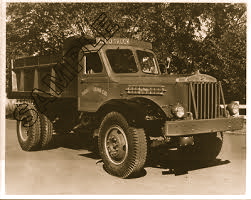
The most noisy were Gino Rugani’s Sterling trucks. They were huge, 1930s green and red painted monsters with a chain drive. There were 3 or 4 of them. One was used to haul his bulldozer or shovel on a low bed trailer. All of them sounded different and the drivers drove them differently.

These were first kept across from the Rugani home on Dog Lane at Pleasant Street. I would hear them climb the hill on Summer Street; from Pleasant Street to Seaview Ave, their chains would grind, then as the truck coasted passed my house, the chains would make a slapping sound with no load on them.

                                                        1940 Sterling Dump Truck

I could tell when Louie, Gino’s son, was driving — his shifting was different than Buddy’s, their truck driver and mechanic.

I could hear these trucks on Church Street on their way home in the late afternoon, slowing at Church, Elm and Summer Street — there was no stop sign in those days — then start up Summer Street at Randall’s under the strain of the long grade uphill.

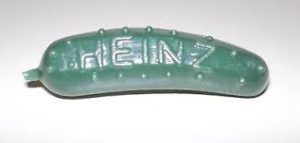
Occasionally, Louie would take me on a short trip in the dump truck. It was so noisy inside you would have to holler to be heard! Louie was the foreman of the operation, which was the biggest in Marshfield. Louie drove a Ford 100 green pickup, and wore a baseball cap with a Heinz pickle pin attached to the front. Louie loved that pin.

One afternoon about five, I was pushing my bike up the hill on Summer Street from Pleasant Street. About halfway up, Louie came over the hill towards me, in his ’47 Ford pickup. I waved to him. Just as he passed, he backfired that Ford at me! It scared the bejesus out of me! I thought I was shot! I shook all the way home!

That was the first time that happened, but not the last. I expected it to happen again, anytime he passed me. I learned that trick well. Later in life I used that trick many times. My favorite spot was going past Sonny Oxner’s garage on Ferry Street, letting out a blast when Sonny’s doors were open. Sonny cursed me many times.

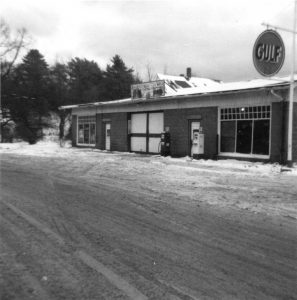
Centre Marshfield Garage, AKA, Oxner’s, Sonny’s.

Photo complements of Ned Dubois.


W. Ray Freden, Marshfield, 70 years.